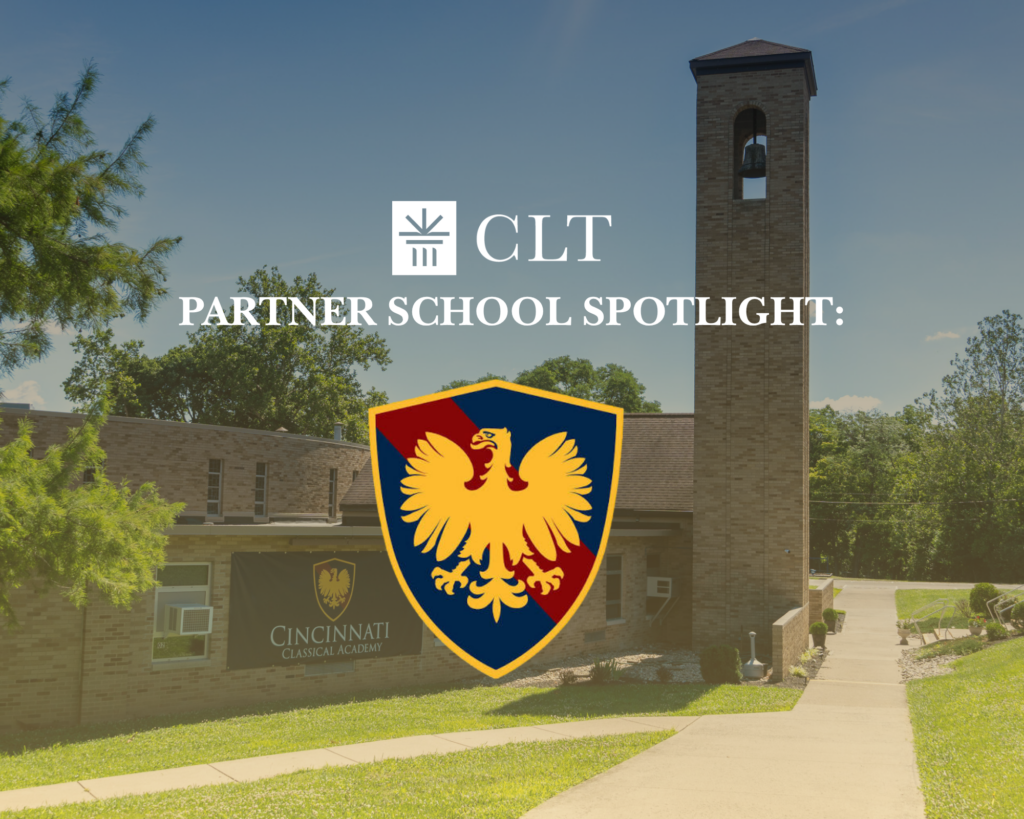
Partner School Spotlight: Cincinnati Classical Academy

CLT is proud to feature Cincinnati Classical Academy in Cincinnati, Ohio as our latest Partner School Spotlight. We had the opportunity to sit down with Michael Rose, Founding Headmaster and Superintendent, to ask him some questions about what makes his school so successful.

Mr. Rose is also a frequent lecturer and writer on education, culture, architecture, and the humanities. He is the author of The Art of Being Human (Angelico Press, 2023) and The Subversive Art of a Classical Education (Regnery, 2026).
What traditions or rituals does your school incorporate into the year/week/day to encourage school culture and community?
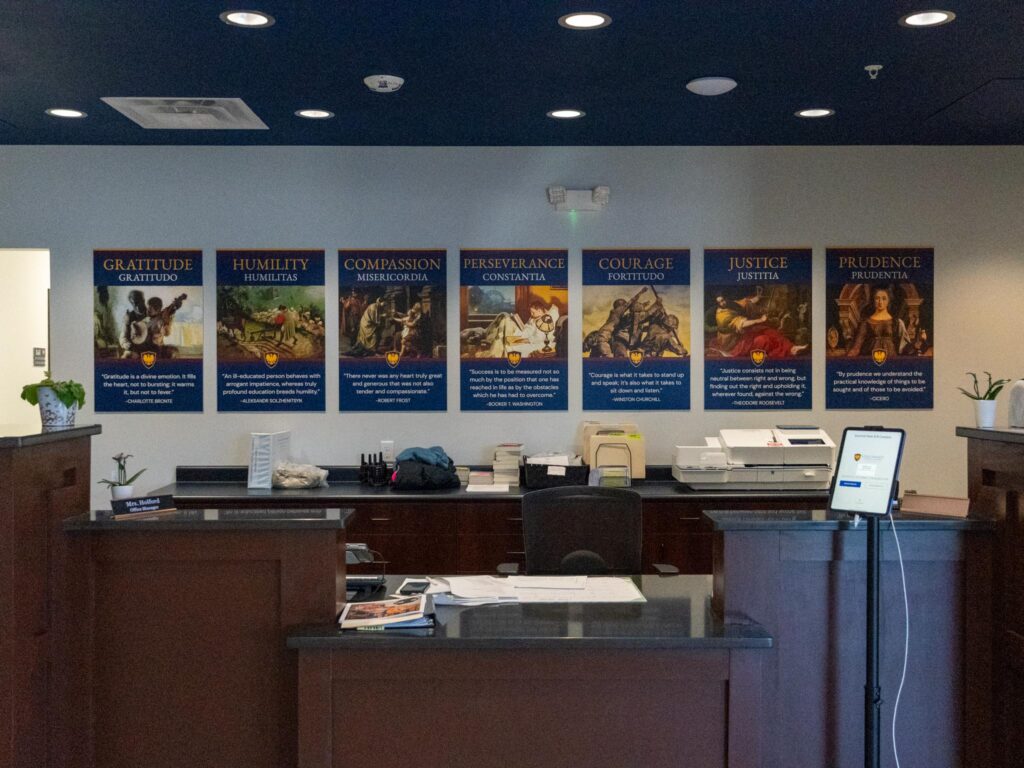
At Cincinnati Classical Academy, we have been deliberate about constructing a year, a week, and a day that feel distinctly ours. Every morning, students across both campuses recite together the school’s seven core virtues: gratitude, humility, compassion, perseverance, courage, justice, and prudence. This is a daily act of formation, a reminder that these words are commitments that govern how we treat one another and how we pursue our work. Students who have been with us for years can tell you not only the words but what they mean, and more importantly, they can point to moments when they tried to live them.
 
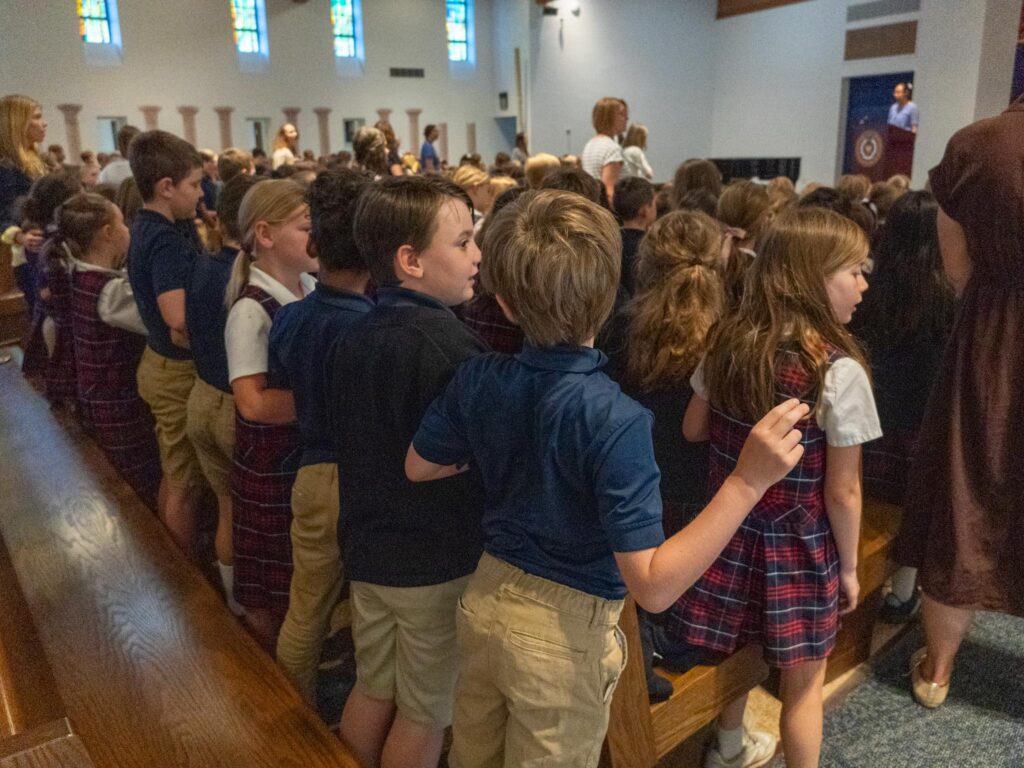
In the lower school, Wednesday assemblies gather the entire division together for something that manages to be both joyful and serious. Students share featured talent: a piano piece, a recitation, a demonstration of something they have worked to master, and we recognize the recipients of virtue cards, students nominated by teachers for embodying one of our seven virtues in a particular way that week. The virtue card tradition is simple, but its effects accumulate. Students begin to notice virtue in one another. They begin to want to be noticed for it themselves.
 
In the upper school, we build culture through what we call Citadel Life Days, dedicated time outside the normal academic schedule for community, reflection, service, and formation. These days punctuate the rhythm of the year and remind students that school is not only about what happens in classrooms.
 
We also maintain a Riddle of the Day and a Painting of the Week, both of which are small but surprisingly powerful. The riddle sharpens wit and rewards the student who thinks laterally; the painting trains the eye and invites conversation about beauty across the school community. Ask any of our students about the painting of the week, and you will find they have opinions. That is exactly what we want.

What does your school do better than any other? Tell us a story about a specific moment, student, or tradition that captures the heart of your school.

We do many things well. We are proud of our curriculum, our faculty, and the culture we have built. But if we had to name one thing Cincinnati Classical Academy does better than any other school we know of, it would be this: we treat beauty as a non-negotiable.
 
Walk into either of our campuses and you will understand within 30 seconds. Our upper school building has 270 framed paintings from the Western canon hanging in its hallways. Our lower school has 177. They are framed works, hung with care, arranged as a teacher would arrange a lesson, so that students move through the building the way a visitor moves through a museum. Every visitor notices. Every visitor comments. And the students, who have grown up walking past Raphael and Rembrandt and Turner on their way to math class, regard this as simply the way school is.
 
That is the point. We want beauty to feel normal to our students, because it should be. The Western tradition produced some of the most extraordinary art, architecture, and music in human history, and classical education exists in part to ensure that each new generation inherits it. Our hallways are part of the curriculum.
 
The story that best captures this: a fourth grader who had never been to an art museum stopped one afternoon in front of a reproduction of Vermeer’s Girl with a Pearl Earring that had been hanging in the hallway all year. She had walked past it hundreds of times. That day, she stopped and asked her teacher: Who is she? What is she thinking? The conversation that followed lasted twenty minutes, at the lunch table, between one teacher and one student, about light and mystery and what it means to be seen. No one planned it. No one scheduled it. It happened because the painting was there, every day, waiting.

What is the one piece of curriculum that your school could not do without?
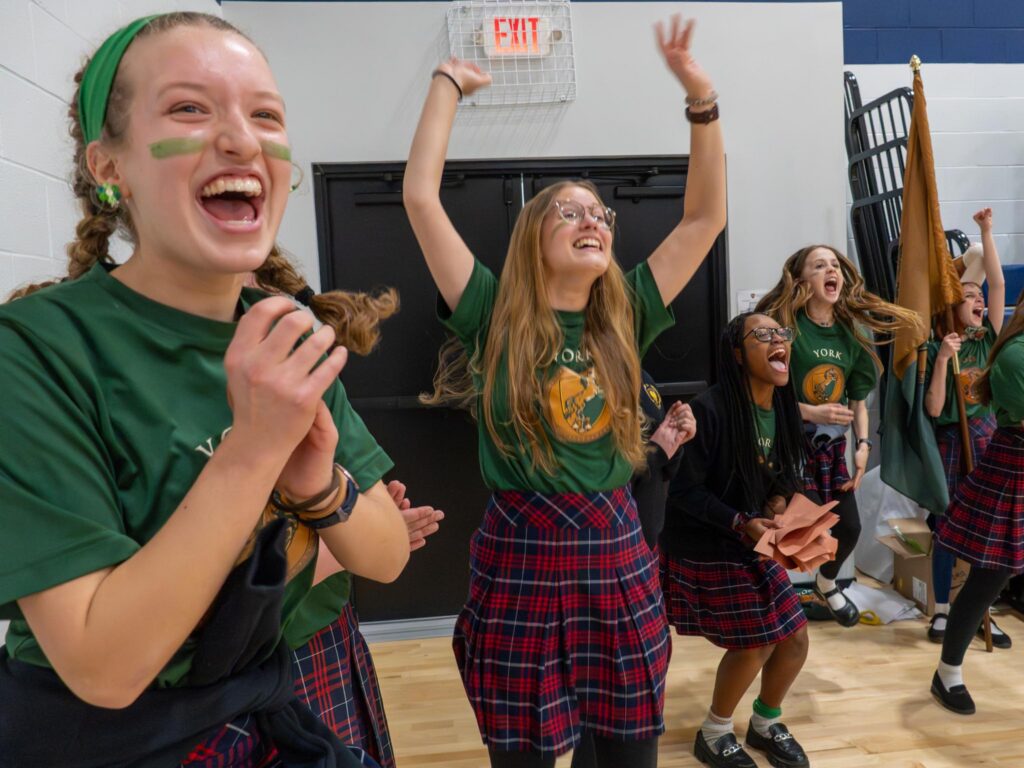
We need all of it. That is the honest answer, and we mean it. A classical curriculum is an integrated whole, and to remove any part is to weaken the structure. But if pressed to name the single element we would defend most fiercely, it is this: the required ninth-grade sequence of Logic followed by Rhetoric.

Every freshman takes a semester of formal logic and then a semester of classical rhetoric. These two courses do something that no other courses in our sequence can quite replicate: they make the rest of the curriculum legible. A student who has worked through the forms of valid argument, who has learned to identify a fallacy not as a vocabulary word but as an actual error in actual reasoning, who has then been asked to construct and deliver a persuasive speech according to the canons of classical rhetoric, reads literature differently, approaches history differently, writes differently, argues differently.
 
Logic and rhetoric are, in the classical tradition, the tools by which all the other disciplines are handled. We teach them early and we teach them rigorously because we believe the ninth grader who has completed them is genuinely better prepared for everything that follows, not just in high school, but in life. In a culture saturated with manipulation, sophistry, and the deliberate confounding of argument with emotion, we consider this the most countercultural thing we do.

How do math and science fit into your vision of liberal arts? What about athletics? Arts?

At Cincinnati Classical Academy, we reject the false hierarchy that places mathematics and science outside the liberal arts, or that treats physical education and the fine arts as supplements to “real” learning. The classical tradition understood all of these as unified in their purpose: the formation of the whole human person.

Mathematics is, in our view, among the most humanizing disciplines in the curriculum. From the earliest grades, we approach it through our Singapore Math “numeracy” program as the training of reason. The student learns to follow an argument to its necessary conclusion, to tolerate nothing ambiguous, to see how truth is demonstrated rather than merely asserted. By the time our students reach Euclidean geometry, they understand that they are learning to think, systematically and logically.

Science, taught historically and philosophically as well as empirically, gives students the wonder of discovery alongside the humility of method. We want students to know not only what we have learned about the natural world, but how we came to know it, and why that matters.

Athletics is not an extracurricular; it is part of the curriculum. Every student in kindergarten through eighth grade takes physical education every single day, and every single day, they break a sweat. This is deliberate. We teach fitness, coordination, and bodily self-mastery according to the ancient conviction that the disciplined body and the disciplined mind are inseparable. In the high school, students may choose PE electives in strength and conditioning, racquet sports, fencing, and archery. These are invitations into traditions of physical excellence that predate the modern world, and they develop in young men and women a relationship to their own bodies that no screen will ever provide.
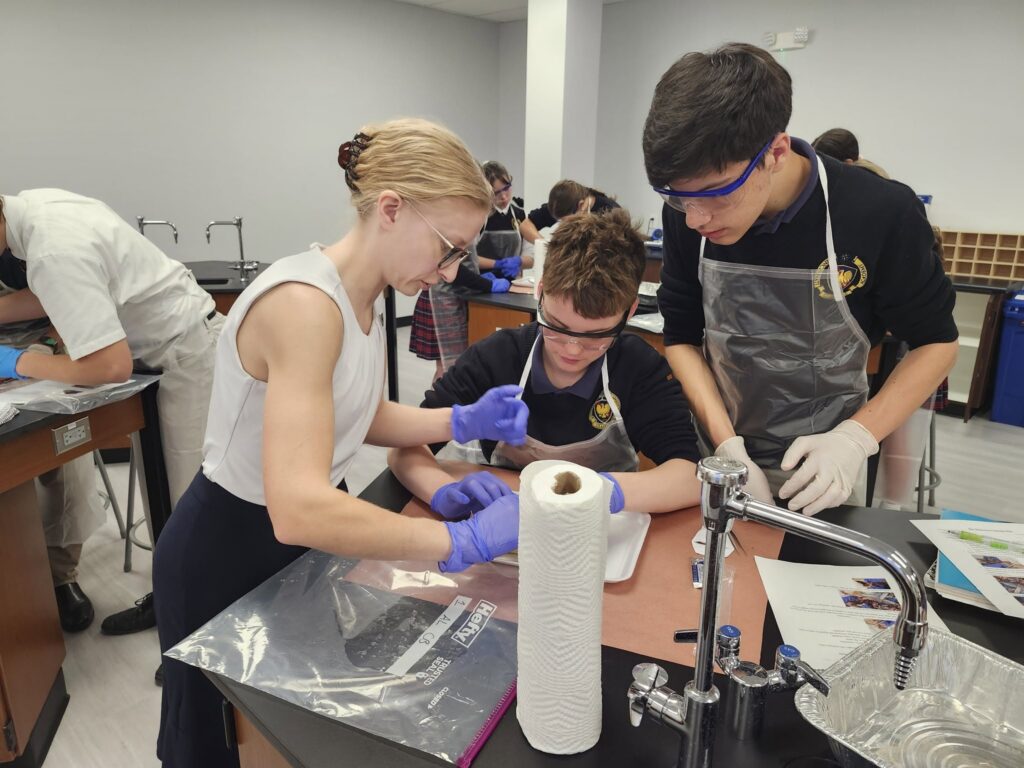
The fine arts receive the same seriousness. Every student in grades K through 8 has fine arts instruction — music and visual arts, alternating — every day. Not once a week. The pursuit and making of beauty is central to what it means to be educated. This conviction is visible the moment you enter either of our campuses: our upper school building has 270 framed paintings from the Western canon hanging in its hallways; our lower school, 177. Visitors notice immediately. The walls are part of the curriculum. In the high school, students may elect courses in classical architecture, sculpture, drawing and painting, pottery, and sewing. These electives are among the most popular we offer. When a student learns to throw a pot or read a Doric column, she is learning something about the human impulse to make, to order, to beautify — and that is precisely a liberal arts education.

What advice would you give to schools considering the CLT?

Go for it. Wholeheartedly and without hesitation.

The Classic Learning Test is more than a testing alternative. It is an act of institutional integrity. For years, classical schools have prepared students in the Great Books, trained them in logic and rhetoric, immersed them in the history of Western civilization, and then sent them to an assessment designed for a fundamentally different vision of education. The SAT and ACT were built for a different kind of student, shaped by a different set of assumptions about what knowledge is and what schooling is for. Asking a classically educated student to prove himself on those terms is a little like asking a sculptor to submit to a speed-typing exam.

The CLT takes seriously what classical schools take seriously. Its reading passages draw from the tradition. Its math sections reward genuine reasoning. And the signal it sends to students, that their education has prepared them for something real and measurable, is not nothing. It matters for formation.

More practically: the CLT is the future. As the classical school movement continues to grow, and as more universities recognize what classical preparation actually produces, the CLT will become an increasingly powerful credentialing tool. Early adoption is a strategic investment in your school’s identity and your students’ futures. Our advice to any school on the fence is simple: your curriculum has earned this assessment. Use it.


We are grateful to partner with Cincinnati Classical Academy. You can learn more about their mission, campus, and classical model by visiting their website: https://www.cincyclassical.org/

Also, be sure to check out the recent conversation we had with Michael Rose on The Anchored Podcast, where he shares more about the signification of moral formation and aesthetic beauty in education.

Scroll to Top