
A Sneak Peek Into the American Civics Exam

By Classic Learning Test
Reading Time: 5 minutes
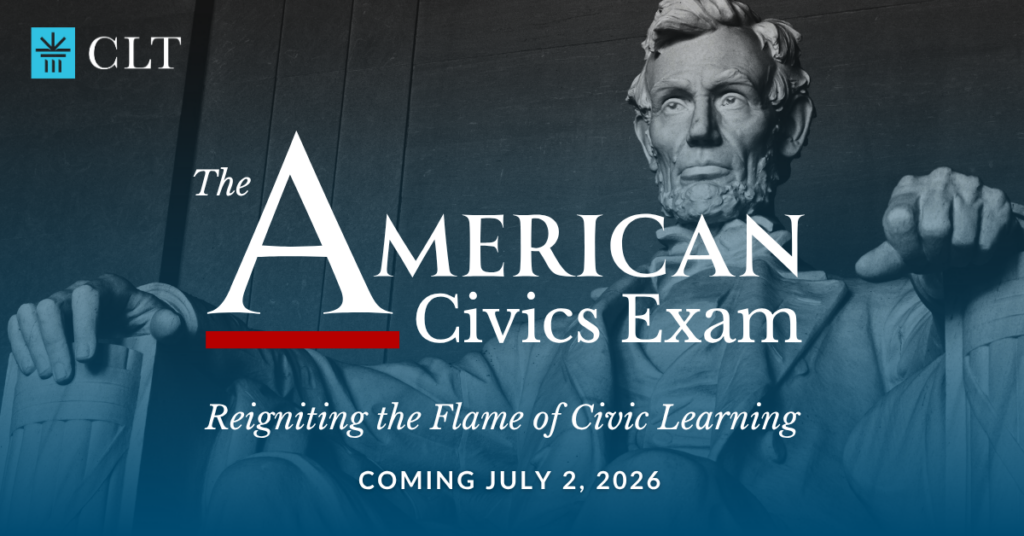
CLT is excited to announce the launch of our American Civics Exam next week on July 2nd! We have partnered with prominent institutions, organizations, and universities to lead the revival of civics education in America–and that begins here, with a free, online assessment designed to measure a substantive understanding of the rights, duties, and civic traditions that define American citizenship. The exam evaluates both foundational facts and how those facts unite in the principles, documents, and historical events of the United States.
We believe that knowledge of our nation’s history is critical to informed voting, the preservation of citizen rights, and civic participation. Understanding how our government works and the history of political ideas in America will lead to better decisions at the ballot box. Understanding our constitutional rights and the intention the Founders had in establishing them will teach us how to better protect them. And cultivating intimate knowledge of our nation’s history, founding purpose, and governing structure will equip citizens to participate more effectively in our communities and democratic processes.
Whether you utilize the exam as a teaching tool or for your own self-education, we hope it will support you in your efforts to preserve the American tradition for generations to come.
Some of the questions on the exam are drawn from or aligned with the U.S. Citizenship and Immigration Services Naturalization Test. The test will be organized into five domains:
Domain 1: Foundations of the American Republic (15 Questions)
This domain assesses understanding of the intellectual, moral, and historical foundations of American self-government. It evaluates knowledge of the philosophical traditions, inherited liberties, colonial practices, and founding principles that shaped the American political order and informed the Declaration of Independence.
Subdomains:
- 1A: Classical and Religious Foundations of Self-Government
Core ideas concerning civic virtue, moral responsibility, republican government, and the rule of law drawn from classical antiquity and religious traditions. - 1B: English Liberties and Constitutionalism
Inherited English traditions including Magna Carta, common law, due process, limited government, and the rights of Englishmen. - 1C: Colonial Self-Government and American Identity
Colonial practices of self-rule, compacts, assemblies, and the development of a distinct American political identity prior to independence. - 1D: Natural Rights and Enlightenment Thought
Ideas of natural rights, consent of the governed, social contract, liberty, equality, and limited government. - 1E: The Declaration of Independence and the American Founding
The principles, arguments, grievances, and enduring significance of the Declaration of Independence and the founding era.
Domain 2: The Constitution and Constitutional Order (15 Questions)
This domain assesses understanding of the structure, purposes, powers, limitations, and continuing development of the United States Constitution as the framework of American government.
Subdomains:
- 2A: Constitutional Structure and the Separation of Powers
The three branches of government, checks and balances, enumerated powers, bicameralism, and the constitutional design to prevent tyranny. - 2B: Federalism, Representation, and Republican Government
Division of power between national and state governments, republican principles, representation, and the structure of the Union. - 2C: Rights, Liberties, and Constitutional Limits
The Bill of Rights, key amendments, due process, equal protection, and constitutional restraints on government power. - 2D: Constitutional Interpretation and Constitutional Change
The amendment process, judicial review, precedent, and the balance between constitutional text and evolving interpretation.
Domain 3: Constitutional Government in Action (10 Questions)
This domain examines how constitutional powers have been exercised, interpreted, expanded, restrained, or contested in major historical moments by the legislative, executive, and judicial branches.
Subdomains:
- 3A: Landmark Supreme Court Decisions
Key Supreme Court cases that shaped constitutional interpretation and American civic life. - 3B: Landmark Legislation and Congressional Power
Major acts of Congress that exercised national power and affected constitutional development. - 3C: Executive Power and Major Executive Actions
Significant uses of presidential authority, especially in times of crisis or national transformation. - 3D: Interbranch Conflict and Constitutional Tension
Moments when conflicts between branches tested or clarified constitutional principles.
Domain 4: American History and National Identity (10 Questions)
This domain assesses knowledge of the great events, heroic figures, national symbols, and geographic facts that define the American story and character. It emphasizes the shared history and cultural inheritance that have shaped the United States as a constitutional republic.
Subdomains:
- 4A: Major Events in American History
Central turning points that formed the nation and tested its principles. - 4B: American Symbols, Heroes, and Traditions
The symbols, speeches, heroes, and traditions that embody American identity and civic ideals. - 4C: American Geography and Territory
Essential knowledge of the land, regions, and territorial growth of the United States.
Domain 5: Rights and Responsibilities of Citizenship (10 Questions)
This domain examines the rights and duties of American citizenship and the character required to sustain the American republic. It stresses that constitutional liberty depends not only on legal protections but also on citizens who fulfill their obligations and cultivate the personal qualities necessary for self-government.
Subdomains:
- 5A: Rights and Liberties
The fundamental rights and protections guaranteed by the Constitution to American citizens. - 5B: Civic Duties, Participation, and Character
The obligations of citizenship, active participation in public life, and the character required for responsible self-government.
Today’s students will be tomorrow’s voters. In releasing the American Civics Exam, our goal is to draw the next generation into a deep understanding of America’s founding principles and the history of our democratic republic. This assessment is intended to encourage them–and all U.S. citizens–to fully step into their role as inheritors of our great American tradition.
Visit this link to sign up for updates about the exam’s release. We hope it will inspire you to keep exploring the 250 years of rich history our nation has to offer.
If you enjoyed this piece, be sure to check out The Anchored Podcast. For more Journal content, check out our post on the role of civic education in the liberal arts. From all of us at the Journal, thanks for reading and have a great rest of your week.
Published on 26th June, 2026.