Dostoevsky: An Author Profile
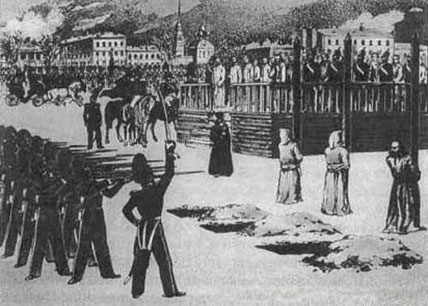
Dostoevsky remains relevant to our time because he did not bind his concerns to his. He thrills with what Joseph Frank called “eschatological apprehension.”
Dostoevsky: An Author Profile Read More »

Dostoevsky remains relevant to our time because he did not bind his concerns to his. He thrills with what Joseph Frank called “eschatological apprehension.”
Dostoevsky: An Author Profile Read More »
Sayers’ work becomes what Woolf calls “a room of one’s own,” a place where she can be at liberty write without thought to the expectations of her sex to marry nor to limit herself to the conventions of her Oxford education.
Of Morals and Mystery Read More »
Self-mastery, over both emotions and thoughts, is an invaluable skill that every person should work to acquire.
Epictetus: An Author Profile Read More »
“The archer that shoots over, misses as much as he that falls short, and ’tis equally troublesome to my sight to look up at a great light, and to look down into a dark abyss.” Michel de Montaigne
The Great Conversation: Temperance Read More »
Though it has been available in European languages for only a couple of centuries, the Bhagavad Gita has had a tremendous influence on the world’s culture.
The Bhagavad Gītā: A Book Profile Read More »
Images of mutual and contrasting courtesies between the God and angels, angels and man, Adam and Eve, are some of his most persistent; even the damned angels cannot function without a parody of heavenly order.
Milton: An Author Profile Read More »
“Such is the unity of all history that anyone who endeavors to tell a piece of it must feel that his first sentence tears a seamless web.” — Sir Frederick Pollock
The Great Conversation: History Read More »
Cicero’s formulation of ethics was a major influence on minds as diverse as St. Augustine, St. Thomas Aquinas, Martin Luther, John Locke, Voltaire, and Thomas Jefferson. Perhaps we would do wisely to return to a fountain that has watered so many so well.
Cicero: An Author Profile Read More »
Although his philosophy was never held by more than a small fraction of the Roman people, his work had a major impact on the poets that succeeded him and remained popular for centuries, and went on to influence many eminent scholars.
Lucretius: An Author Profile Read More »
The paradoxes in how gravity, light, and atomic nuclear forces operate have prompted subtle theories about not only nature, but reality as such—bending science back towards its parent discipline of philosophy.
The Great Conversation: Astronomy Read More »